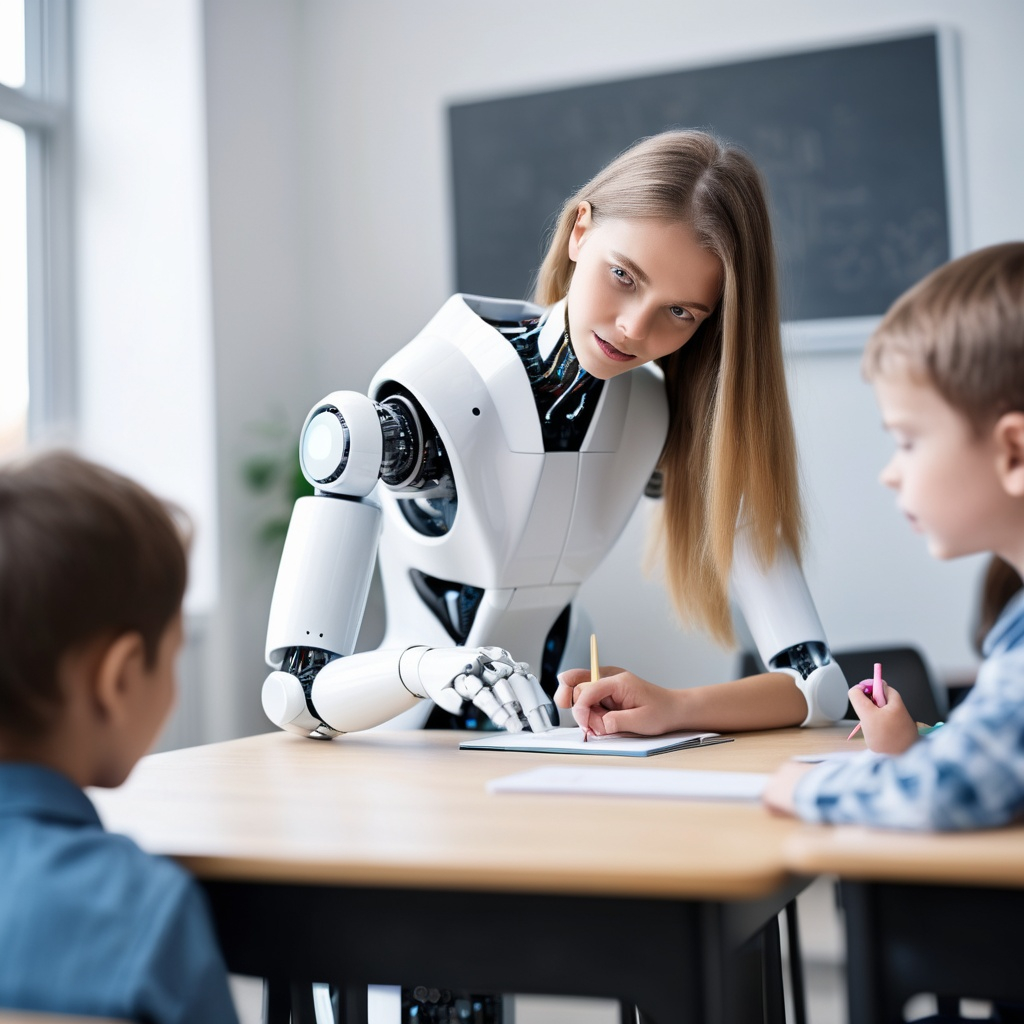
The rapid integration of Artificial Intelligence within the education sector presently unfolds deep transformations. Traditional models of education are flipped on their head with AI's potential to enhance learning experiences, personalize education, and optimize administrative processes. Artificial intelligence, from personalized learning platforms and intelligent tutoring systems to predictive analytics, automatics, is going to revolutionize how we learn and teach. The article reviews the role that AI plays in education, applications transforming the sector, challenges facing the technologies, and future trends molding AI-driven education.
Role of AI in Education
AI automates administrative tasks in education, personalizes learning, increases student engagement, and improves teaching methodologies. While processing large volumes of data and adapting to the needs of individual learners, AI has the potential to create interactive, dynamic, and effective learning environments. Segmentation of applications of AI in education, based on a number of critical areas, may include:
1. Personalized Learning
One of the most critical contributions of AI in education is personalized learning. Traditional models of classrooms often bank on a "one-size-fits-all" approach, which may not exactly work for the diversified needs of each and every student. AI-driven platforms adjust their educational content to match the learning speed, skills, and knowledge gaps of a student. These systems track data from quizzes, assignments, and interactions with others, monitoring patterns in individual learning styles and offering personalized pathways to the students.
For example, some AI-enabled platforms, like Knewton and DreamBox, create customized learning experiences through modification of lesson plans and practice exercises based on a student's performance. In this way, students can move at their own pace and make sure they master the foundational concepts before advancing on to other and more complex topics.
2. Intelligent Tutoring Systems (ITS)
ITS is another breakthrough application of AI in education. ITS gives students personalized guidance and feedback, emulating one-on-one interaction with a human tutor. In these systems, AI algorithms know how to understand the learning style of a student, when he is having trouble, and in that case offer customized support for him to get through the problem areas.
A notable example includes Carnegie Learning, which uses an AI-based tutoring system to provide real-time feedback and personalized lesson plans in mathematics. The system has been proven to increase student engagement while eventually guaranteeing better student outcomes through the delivery of customized support in line with the progress and comprehension levels of each learner.
Besides that, ITS can be applied in language teaching, coding, and STEM subjects for immediate and interactive feedback that will guide the learner efficiently to develop new skills. The combination of AI's analytical capability with real-time responsiveness creates an immersive and supportive learning environment.
3. Automated Assessment and Feedback
Educators always find that grading assignments and giving effective feedback tend to be laborious activities. AI automates these to free educators for the core aspects of teaching and interfacing with students. AI-driven assessment tools go through student submissions efficiently-be it multiple-choice quizzes, essays, or even coding assignments-and give instant feedback.
Other tools, such as Turnitin, scan not only for plagiarism, but use AI to provide feedback on writing quality, helping students become better writers. In programming classes, Codio uses AI to grade the code submissions for errors, as well as making recommendations for improvement. Automating such assessments saves time, provides consistency, and fairness in grading.
AI, apart from grading, is capable of analyzing student performance data to minute details for providing feedback on areas where students should actually improve. This would help educators in pinpointing patterns and early interventions where students are struggling. In this manner, targeted support strengthens the process of learning and provides more personalized guidance.
4. AI-Powered Learning Assistants and Chatbots
AI-powered chatbots and virtual assistants will be a commonplace feature in educational settings. The AI systems can then support students by answering questions, suggesting resources, and navigating course materials. Such chatbots are available 24*7 to offer immediate support, hence enhancing the student learning experience by responding to students beyond classroom hours.
For instance, systems like Quizlet and Duolingo use AI-powered chatbots that actively interact with students to facilitate practice language skills, answer questions, or give recommendations on further work in areas where the student had bad results previously. These chatbots have been designed to keep the students active for motivation toward continued progress.
Virtual assistants in higher education perform administrative roles, such as course registration, including reminding students of deadlines and giving learning resources. The Georgia State University has used AI-enabled virtual assistants to reduce student dropout rates by giving students timely reminders and connecting students with its support services. This has demonstrated how AI retains students.
5. Predictive Analytics for Student Performance
This, in turn, allowed predictability analytics in education to shape and take form, due to the fact that AI systems were now able to analyze a large amount of historical data related to student performance, identify patterns from this, and predict the future outcomes of given student intake. These AI algorithms assist educators and the institution by showing which students, due to attendance, grades, or participation, are at risk of failing or dropping out.
This predictive ability allows the schools and universities to intervene early with supplementary support, tutoring, or counseling. Other AI-enabled platforms, such as Civitas Learning, offer actionable insights to educators and administrators by means of data analytics that track student engagement and performance. Anticipating problems and being able to make proactive responses improves student success rates and enhances overall institutional performance.
Challenges and Limitations of AI in Education
While AI has several explicit advantages, the adoption of AI in education itself is filled with problems and several shortcomings. These are listed below:
1. Data Privacy and Security Concerns
For AI to be usable in education, it requires access to volumes of information regarding students. This raises concerns over privacy and security of data. Schools and educational institutions should ensure that the information fed to AI machines is well protected and legal compliances have been adequately pursued, such as FERPA in the United States and the GDPR in the European Union. Ensuring student information confidentiality is crucial for ensuring trust and thwarting data breaches.
2. Algorithmic Bias in AI
AI systems are only unbiased to the extent that their training data is unbiased. Similarly, AI models built on biased datasets will likely breed inequity and provide unequal opportunities for students. For example, a virtual tutoring system that is disproportionately trained on data from high-achieving students attending adequately resourced schools cannot support students from less privileged backgrounds.
To reduce bias, developers should incorporate more diversity in the datasets used while training AI models. Secondly, there will be a need for continued monitoring of the system with active changes to ensure that every student gets equal treatment. This is the challenge that must be surmounted if equity and inclusion are to flourish in education.
3. Teacher and Student Adaptation
Teaching integrated with AI means that teachers and students should master new technologies all the time. In this respect, some teachers might feel the inability to gain necessary skills in the implementation and usage of tools and tools powered by AI, which creates a kind of digital gap. This calls for professional training and development for teachers to maximize the full potential benefits of AI in the classroom.
Similarly, students will find it difficult to cope with AI-driven learning platforms in areas where either the technological infrastructure is poor or the households are unable to afford digital devices. In this regard, there is a need for equitable access to technology and digitization programs to remove this gap in AI-enhanced education.
4. Lack of Human Interaction
While these may be more efficient modes of education, they reduce face-to-face interaction levels between teachers and students. Traditional classrooms allow for real-time, human-like interaction when educators are able to grasp non-verbal cues, emotions, and other aspects of student behavior that AI might not be prepared for. The efficiency of AI, in this sense, will have to be balanced with the need for human interaction since the emotional and social aspects of learning continue to be important for the development of students.
Future Trends in AI in Education
The future of AI in education will be really bright, and here are a few of the most emerging trends that are most likely to shape its continuous evolution:
1. Immersive Learning with AI and Virtual Reality (VR)
AI, together with VR, is expected to develop simulation learning experiences that enhance student engagement and understanding. AI-powered VR can take students into the virtual lab, historical period, or geographical region as a way of experiencing learning in a hands-on way. This type of environment lets the learners interact and explore the content in ways that are not possible with the traditional mode of learning; hence, it ensures a great deal of comprehension and retention.
2. Lifelong Learning and AI-Assisted Skill Development
With time, the role of AI in education will increasingly complement formal schooling towards lifelong learning and skill development. Presently, online learning platforms like Coursera and Udemy apply AI in recommending courses and personalized learning tracks that match career goals and user interests. As the nature of work evolves, AI will become key in the reskilling and upskilling of the workforce with personalized learning experiences that morph to meet the demands of adult learners and professionals.
3. Ethics in AI and Advanced Data Management
With the greater use of AI in education, ethical AI development and data governance will gain greater momentum. The Educational institutions and technology providers will have to set stricter policies and frameworks that make AI systems nondiscriminatory, transparent, and secure. That covers bias, data privacy, building AI systems that are explainable, and accountable.
Conclusion
AI in education enables personalized learning opportunities, which better engage students in their learning process; it also assists in administrative processes. From intelligent tutoring systems and predictive analytics to automated grading and virtual learning assistants, AI is changing the way we teach and learn. While AI technologies are improving continuously, critical issues on data privacy, bias, and access need to be continued with the view toward equity in the benefits of AI in education. If implemented cautiously, with a view toward ethics in development, AI promises to shape a future where education may be more accessible, personalized, and effective for learners around the world.