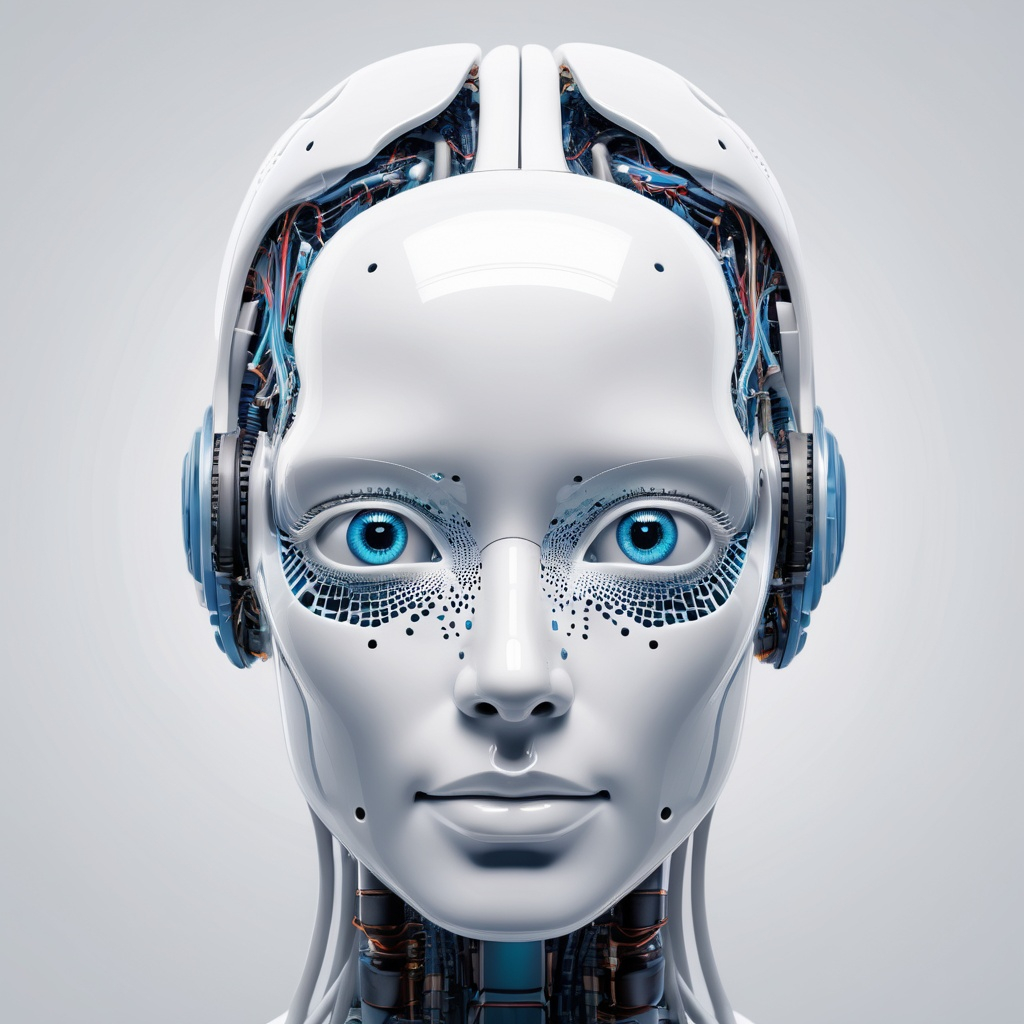
The generative models have quickly become one of the most innovative and transformational technologies in the field of artificial intelligence. Unlike traditional AI dealing with pattern recognition, prediction, or process automation, generative AI models create something absolutely new: images, text, music, and even totally virtual worlds. These models have started to change the game in industries ranging from art and entertainment to healthcare and manufacturing due to their capacity for automation, enhancement of creativity, and productivity. In this paper, we will take a deep look into the development of generative AI models, the technology behind them, their applications, and challenges with future trends associated with this nascent field.
Understanding Generative AI
Generative AI includes a class of AI models developed to generate new data in a way that would be similar to any data they have ever seen. Advanced algorithms of such models, especially neural networks, generate new content by following patterns and structures already available in the input data. Currently, the most widely used types of generative AI models are Generative Adversarial Networks (GANs), Variational Autoencoders (VAEs), and Transformers-like GPT (Generative Pre-trained Transformer).
1. Generative Adversarial Networks (GANs)
GANs were introduced in 2014 by Ian Goodfellow. A GAN consists of two neural networks: a generator and a discriminator. The first one is used for creating new content-for example, images-while the second one evaluates how realistic that content is. The generator tries to come up with data which will be indistinguishable from real data, whereas the discriminator has the opposite objective, namely, to correctly distinguish real data from the generated one. They are trained together in a competitive process, after which their skills improve.
GANs have been applied to a wide variety of tasks for the purposes of synthesizing realistic images, videos, and other animations. For instance, GANs can generate human faces that could be mistaken for real, landscapes, and even art styles which could have been created by renowned artists. The technology has also been put to work in the creation of deepfakes whereby GANs generate synthetic but highly realistic videos or audio of people.
2. Variational Autoencoders
The other type of generative AI model is that of VAEs, very useful for compressing and generating data in general. It acts by compressing input data into a small representation that goes to what is called latent space and then decodes it to generate new and similar data. Typically, VAEs are applied in domains where generating variations for certain types of data will be needed, such as generating variations in images, creating new designs, or producing customized avatars.
They find most applications in fields of object generation in 3D modeling and product design, where an object is varied for testing, simulation, or prototyping. VAEs explore the latent space in order to generate different and customized outputs.
3. Transformers and Large Language Models
On the frontier of generative AI, especially NLP, stand transformers-a class of models currently being developed at OpenAI and including the GPT series. These models are supposed to comprehend and generate human-like text from the input given to them. Transformers make use of a self-attention mechanism, which enables them to process and generate contextually correct content, thus making them really strong in performing tasks such as text generation, translation, summarization, and conversation.
The most recent forms of LLMs, including GPT-3 and GPT-4, can generate highly coherent and contextually relevant text. They help create everything from articles and stories to code and chatbots, revolutionizing industries using text-based automation and content creation.
Generative AI Model Applications
Generative AI can be quite versatile, serving a multitude of industries with aplomb. Some of the extensive and far-reaching applications of generative AI are listed below:
1. Content Creation and Media
Generative AI models revolutionized creative industries, allowing for the quick and automated creation of images, music, videos, and text. On one hand, it results in GANs generating new artworks under the influence of famous artists' stylistics; on the other hand, AI music composers create original pieces based on different genres of music and structures. For example, the companies Jukedeck and Amper Music are able to provide video games, films, and advertisements with music by leveraging artificial intelligence in order to generate the music, therefore finding faster and cheaper solutions for content creators.
GPT-3-based models serve in content marketing and journalism to generate articles, product descriptions, social media posts, among others. These models also let companies scale their content production efforts while maintaining consistency and quality. In addition, AI-driven chatbots and voice assistants serve customers at an individual level to improve the users' experience on digital platforms.
In film and animation, generative models find their application in the creation of realistic special effects, virtual characters, and dynamic environments. These technologies streamline production by being cheaper, faster, and providing creative flexibility.
2. Healthcare and Drug Discovery
Generative AI models contribute to healthcare by delivering key insights in drug discovery and personalized medicine. The generative models can propose new drug candidates through analyzing vast datasets of chemical compounds and molecular structures, accelerating the process of development and reducing the costs compared to traditional drug discovery methods. Using AI, companies such as Insilico Medicine and Atomwise identify promising drug candidates much faster than traditional methods, raising hope for quicker treatments and possible cures.
Apart from drug discovery, the use of generative AI extends to medical diagnosis and imaging. AI models create high-resolution medical images and simulate the development of a disease in order to assist doctors and researchers in understanding diseases such as cancer, heart-related diseases, neurological disorders, among others. These models assist in the development of digital twins, virtual replicas of patients, which help predict treatment outcomes and optimize medical procedures.
3. Manufacturing and Product Design
But these generative AI models have great importance in manufacturing and design industries, where they optimize such processes in product development and production. Generative design is an AI-driven design process in which a number of innovative design solutions are generated via the exploration of a great deal of variations based on specific criteria that include material constraints, structural integrity, and aesthetic preferences. This allows companies to achieve far more efficient and sustainable product designs while wasting a minimum amount of time and materials.
AI models simulate factory processes that allow predictive maintenance, quality control, and workflow optimization inside manufacturing. AI builds virtual models of production systems to locate inefficiencies and gives recommendations on how to raise productivity and lower operational costs.
4. Gaming and Virtual Reality
The generative AI has been embraced by both the gaming and virtual reality industries as a way to develop immersive and dynamic experiences. In game development, AI models create immense complex environments, characters, and narratives; developers can create expansive virtual worlds with much less manual effort. Equally important is the use of procedural generation techniques, powered by AI, in creating realistic terrains, cities, and ecosystems that enrich the gaming experience.
In VR, generative models can digitally create real human interactions and environments, further enhancing training simulations and educational applications, together with therapy. An example would be that virtual environments synthesized by AI allow for exposure to patients who suffer from PTSD under very controlled conditions and settings that can be manipulated based on the requirements.
Limitations and Challenges of Generative AI Models
However exciting the new opportunities with generative AI models may be, considerable challenges and limitations arise in application:
1. Ethical Concerns and Misuse
Chief among the pressing issues are those involving the misuse of generative AI, especially in deepfakes, highly realistic fake images, videos, or audio clips. Deepfakes open up more malicious opportunities, such as misinformation, creating fake identities, and political manipulation. Ethical concerns like those provide an impetus toward developing regulations and detection technologies which may trace and impede the viral dissemination of deepfake contents.
Then there is the issue of copyright and intellectual property with generative models. For example, AI art can be created with bits of other styles, and that again brings up the question of ownership and authenticity. Responsible and ethical use of generative AI technologies creates trust and creative integrity.
2. Bias and Fairness
Normally, generative AI models are trained on very large datasets that could potentially have pre-existing biases in them. The result is that the models, too, then tend to provide biased outputs. For instance, GPT-based language models may result in contents depicting any gender, racial, or cultural biases that existed in the data they were trained on. These risks start turning into sensitive applications related to deployment, such as hiring or legal processes, where the application of bias and fairness is very critical.
Addressing bias in generative models involves enhancing diversity in datasets, mitigation techniques for bias, and transparency in how the AI models are built and set up. While researchers actively try to make such AI systems unbiased and fair, challenges persist.
3. High Computational Costs
Training and deploying large generative AI models, such as GPT-4 or advanced GANs, require considerable computation. The computation of large AI models is expensive and resource-intensive by nature; hence, they carry a blackspot of increased energy consumption and contribution to harming the environment. More efficient developments in AI architecture and new ways of training can reduce further carbon emissions from generative AI and make it greener.
Trends in the Future of Generative AI
Generative AI will continue to evolve, with several key trends that will shape its future. Some of these trends include:
1. Multimodal Models
The future of generative AI models is in the integration of multiple modalities, such as text, images, and audio, to provide a fuller and more interactive content. For instance, AI models might generate realistic virtual worlds from written descriptions by combing image and text generation capabilities, thus allowing new methods of storytelling and game design.
2. Personalization and Human-AI Collaboration
Generative AI will increasingly be about personalization, enabling users to create things in their flavor. This big trend will arise across industries from fashion to gaming to marketing, where AI can build products and experiences related to users at an individual level and push ads.
Also, AI is going to enhance human creativity by acting as a collaborative tool. Such models can facilitate the creation process of artists, writers, and designers in generating new ideas and variants more effectively. Mainstream design tools powered by AI collaborate with human creators-things can't get better than this: a perfect fusion of human ingenuity and AI's generative capabilities.
3. Ethical AI Development
As generative AI becomes more mainstream, it means there will be a greater emphasis on ethics in the development methods themselves, including bias mitigation, transparency, and accountability. Organizations and governments will follow through with guidelines and regulations that make sure the use of AI will be carried out responsibly, without misuse, and for the protection of users' rights.
Conclusion
Generative AI models mark a technological leap into new frontiers of creativity, automation, and innovation within a wide array of industries. Indeed, challenges persisting around ethical concerns, bias, and associated computational costs notwithstanding, the benefits are potentially huge. Going forward, as technology evolves, generative AI models will continue to be even more central to shaping the future of creativity, automation, and human-machine collaboration that paves the way for a truly connected and innovative world.