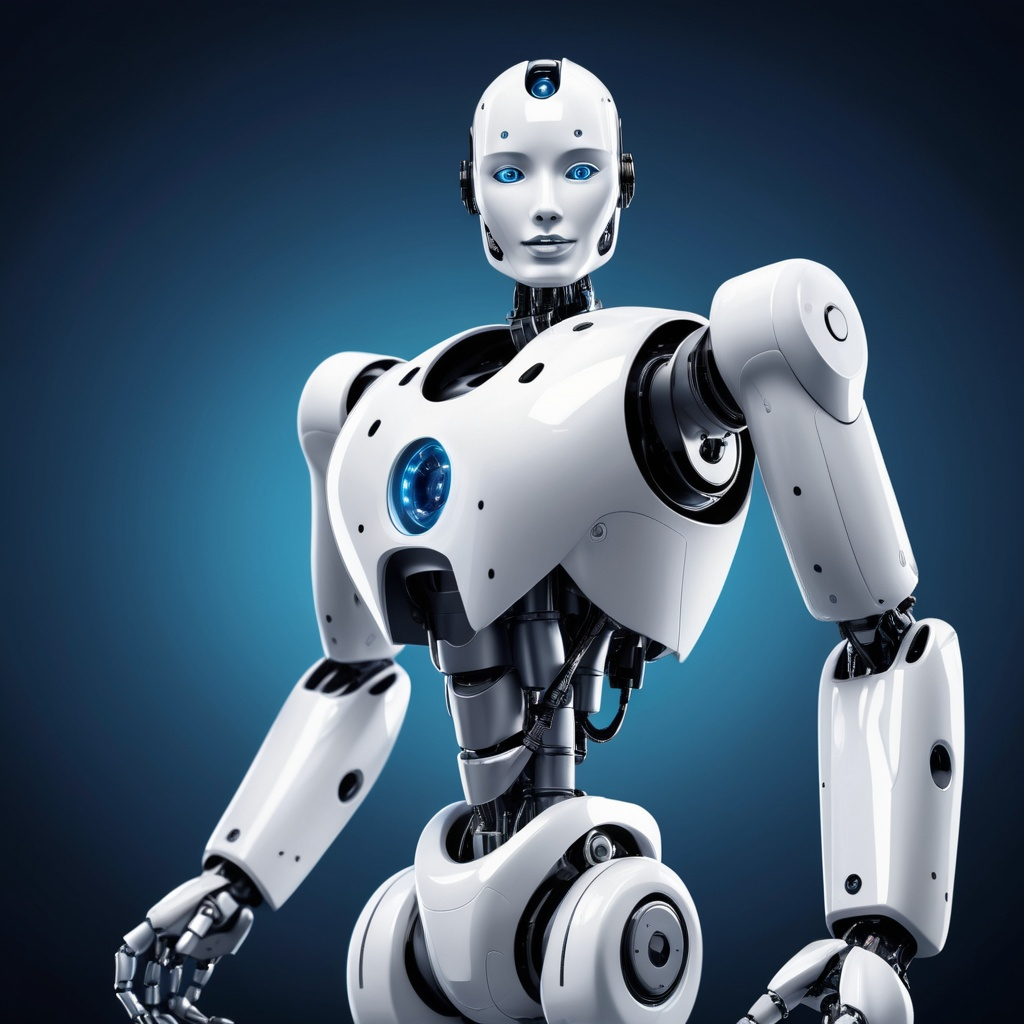
The two areas of innovation that are rapidly converging are robotics and artificial intelligence; hence, technologies are developed that blur the definition of human-machine interaction. By integrating AI into robotics, robots can now autonomously perform tasks, learn from their environment, and even collaborate with humans in ways thought to be the stuff of science fiction. From manufacturing to healthcare, space, and everyday domestic use, robotics driven by AI transforms industries and reshapes our world. This paper discusses the evolution of robotics, AI's contribution to the development of robotic systems, and the applications and trends in intelligent robotic systems.
Evolution of Robotics and Artificial Intelligence
While robotics is originally from engineering and automation, its core began in the early 20th century when industrial robots were designed to conduct tasks in manufacturing that were repetitive and cumbersome. These earlier stages of the robots were no more than simplistic machines that adhered to a set of pre-programmed instructions with absolutely no adaptability in an environment. As technology advanced, so did robotics, with increasingly sophisticated sensors, actuators, and computing systems being integrated into the designs of robots.
AI has brought a new generation to robotics, wherein the evolution of robots from simple programmable machines to intelligent systems for learning and making decisions has taken place. AI permits the processing of large volumes of information, including pattern recognition and autonomous decision-making based on current, real-time information. The development of robots with this potential to perform such complex tasks is because of the integration of robotics with AI; these tasks range from navigation and object recognition to even social interaction.
The Role of AI in Advancing Robotics
The segment of AI acts as the driving force for autonomous and intelligent robots. It grants a number of important capabilities to robots that help them function within dynamic, uncertain environments. Some major AI technologies of robotics include:
1. Machine Learning (ML)
While all these can be achieved, one of the subsets of AI is machine learning, which allows robots to learn from data and experiences. In training a robot for performing tasks, ML algorithms could be used and trained for anything from mere object recognition to highly complicated decision-making. To give an example, it would be possible, with ML models, to teach robots in such a way that they could effectively learn to distinguish between different types of objects and understand their handling.
Another influential form of ML in robotics is reinforcement learning, where a robot learns by trial and error, with either rewards or penalties against its actions. This technique is regarded as critical in developing autonomous robots capable of adapting not only to new environments but also continuously improving their behaviors over time.
2. Computer Vision
It is an AI-driven independent discipline that allows the interpretation and inference of visual information about the surroundings by robots. Cameras along with advanced image-processing algorithms help robots to detect, recognize, navigate, and perform interaction with humans and other machines. For example, most of the operation in the case of autonomous vehicles is done with the help of computer vision, which aids in keeping track of road signs, people, and other vehicles on the road for safe navigation.
Coupled with methods of deep learning, computer vision allows robots to conduct complex visual tasks such as identifying the face and interpreting gestures. AI-powered robotic arms utilize computer vision in manufacturing for the identification of parts along a production line for accuracy in production.
3. Natural Language Processing (NLP)
Other imperative AI technologies in use in robotics include NLPs, especially in those designed for interaction with humans. This could enable the robot to understand, interpret, and respond to human speech, hence allowing for more natural and intuitive communication. Various service robots resolve customer inquiries, provide information, and even hold casual conversations by using NLP.
NLP participates in developing humanoid robots-those designed to look and communicate with humans. They may understand even the subtlety of the language tone and context that make interactions life-like. In healthcare, NLP-powered robots serve them by responding to patient needs and offer companionship that enhances patient care and comfort.
4. Path Planning and Navigation
The AI algorithms are crucial in making the robot self-sufficient, enabling it to find its way through space. In general, the path-planning algorithms find the most efficient course which a robot must take to reach a target while avoiding hazards and other obstacles. This technology is imperative for mobile robots such as autonomous drones and self-driving cars, which have to operate safely in dynamic environments.
Sensor fusion techniques mean that data from different sensors may be combined, including LiDAR, cameras, and ultrasonic sensors. These enable the AI algorithm to create a complete map and update it in real time, hence enabling a robot to make intelligent navigation decisions even in complicated and time-varying conditions.
Applications of Robotics and AI
Thus, the integration of AI in robotics has resulted in a wide range of applications from different sectors. Accordingly, these applications have typified the flexibility and capability of the intelligent systems of robots.
1. Industrial Automation and Manufacturing
Manufacturing was among the very first to adopt robotics, and it still is at the forefront of this new era of robotics. Nowadays, AI-driven robots lie at the heart of driving automation processes for manufacturing lines, making them more efficient and free of human error. Collaborative robots, or cobots, are designed to work together with human coworkers by providing help in certain operations such as assembly, packaging, and quality control.
These robots will leverage AI to become flexible to production line changes, identify defects, and quickly learn new tasks. In embedding AI into manufacturing companies, the result will be optimization of production, reduced downtime, and flexible responses to market demands.
2. Healthcare and Medical Robotics
In healthcare, the use of robotics and AI aims to enhance patient care and the accuracy in surgeries. Robots with AI algorithms assist surgeons with a high degree of accuracy and control in delicate procedures that no human hand is capable of. Surgical robots can make very precise cuts to minimize tissue damage, reducing recovery times for better outcomes.
This would enable the AI-powered rehabilitation robots to support the patients in their exercises while monitoring patient performance in real time to make adjustments in treatment plans. Other roles service robots can play include the delivery of medications, cleaning of rooms, and spending time with the patients to increase comfort and efficiency in healthcare facilities.
3. Autonomous Vehicles and Transportation
Examples of the most observable AI-powered robotics include autonomous vehicle systems, self-driving cars, drones, and delivery robots. Algorithms in AI run data from the sensors in these vehicles to understand the environment and arrive at decisions to navigate around safely without the intervention of a human. Companies like Tesla, Waymo, and Uber are developing AI-driven vehicles with an objective to transform transportation for better safety, reduction of congestion on roads, and facilitation of mobility among disabled people.
Drones with AI are deployed in performing a host of activities that range from delivering packages to conducting aerial surveys and monitoring of agriculture. Their application in environments where it is difficult or dangerous for human beings to go shows the importance and versatility of robotics and AI in transportation.
4. Service and Hospitality Robots
Another major industry to have taken robotics up is the service sector, more so in areas such as customer service, hospitality, and retail. Equally, AI-powered robots help direct guests to their rooms in hotels or notify them of the amenities available. Robots in retail assist customers with finding products, managing inventory, and sometimes even processing transactions.
Domestic robots are more common nowadays, like vacuum cleaners and lawn mowers. These robots apply AI to map spaces and navigate efficiently; thus, autonomous performance of tasks increases convenience in everyday life.
5. Space Exploration
Space exploration has its own special challenges, and overcoming these hurdles essentially calls for the prominent usage of AI-powered robots. Rovers, such as those deployed by NASA's Mars Rover mission, employ AI to traverse hostile topography, collect samples, and conduct experiments on other planets. Decisions are made independent of interference by any human operator, since communication lines between Earth and Mars take time.
AI also plays an important role in the development of humanoid robots for space missions. This will enable them to perform tasks for astronauts and carry out maintenance tasks that bear a lot of risks in human exploration in space.
Challenges and Future Trends in Robotics and AI
While remarkable improvements are seen in robotics and AI, some of the persisting challenges include:
1. Ethical and Safety Concerns
With increased robot autonomy and direct interaction with human beings, safety and ethics concerns come even more strongly into focus. There are efforts to make AI systems risk-averse within the specifications of ethics in using healthcare or autonomous vehicles. All this calls for an evolving regulatory framework that would engender responsible deployment of AI-powered robots.
2. Technical Limitations
Limitations still exist in robots' technical capabilities, such as their lack of understanding of complex human behaviors or acting in unpredictable environments. More inclusive and complex algorithms of AI are needed to be designed to increase perception, decision-making, and learning capabilities in robots.
3. Integration and Interoperability
Robotics will only be effective in a wide plethora of applications if various robotic systems are interoperable with other robotic systems and AI platforms. Interoperability between these systems is achieved through standardization and collaboration by the developers or manufacturers.
Future Trends in Robotics and Artificial Intelligence
Brighter futures lie ahead for robotics and artificial intelligence as several present emerging trends shape the industry to come:
Cobots are the future of robotics: human-robot collaboration. They will be more and more capable, by design, to factor in effectively and interactively human factors; their capabilities will cover the area of safety.
Artificial Intelligence-Powered Humanoid Robots: More advanced humanoid robots will rise, designed to coexist with humans more smoothly. Their applications could be realized in caregiving, education, and customer service, hence upgrading human-robot interaction experiences.
Improved Autonomous Navigation: With the improvement in AI technology, the autonomous robots will be able to navigate increasingly complex environments. These include cities and hazardous sites. New frontiers open up for things like drones, delivery robots, and autonomous vehicles.
Agriculture Robotics: Artificially intelligent robots will be of utmost importance in agriculture, right from planting and harvesting to monitoring crops. These robots are bound to optimize agricultural practices, increase efficiency, and sustain farming with sustainability.
Conclusion
From breakthroughs in technological innovation, robotics and AI have been the mainspring, transforming whole industries of human activity and improving life in general. Developing intelligent systems capable of learning, adapting, and working together, AI began to be integrated into robotics. Yet, though some obstacles need to be overcome, further steps within robotics and AI developments portend a future in which autonomous and intelligent robots are crucial for everyday life, improving productivity and quality and providing safety.