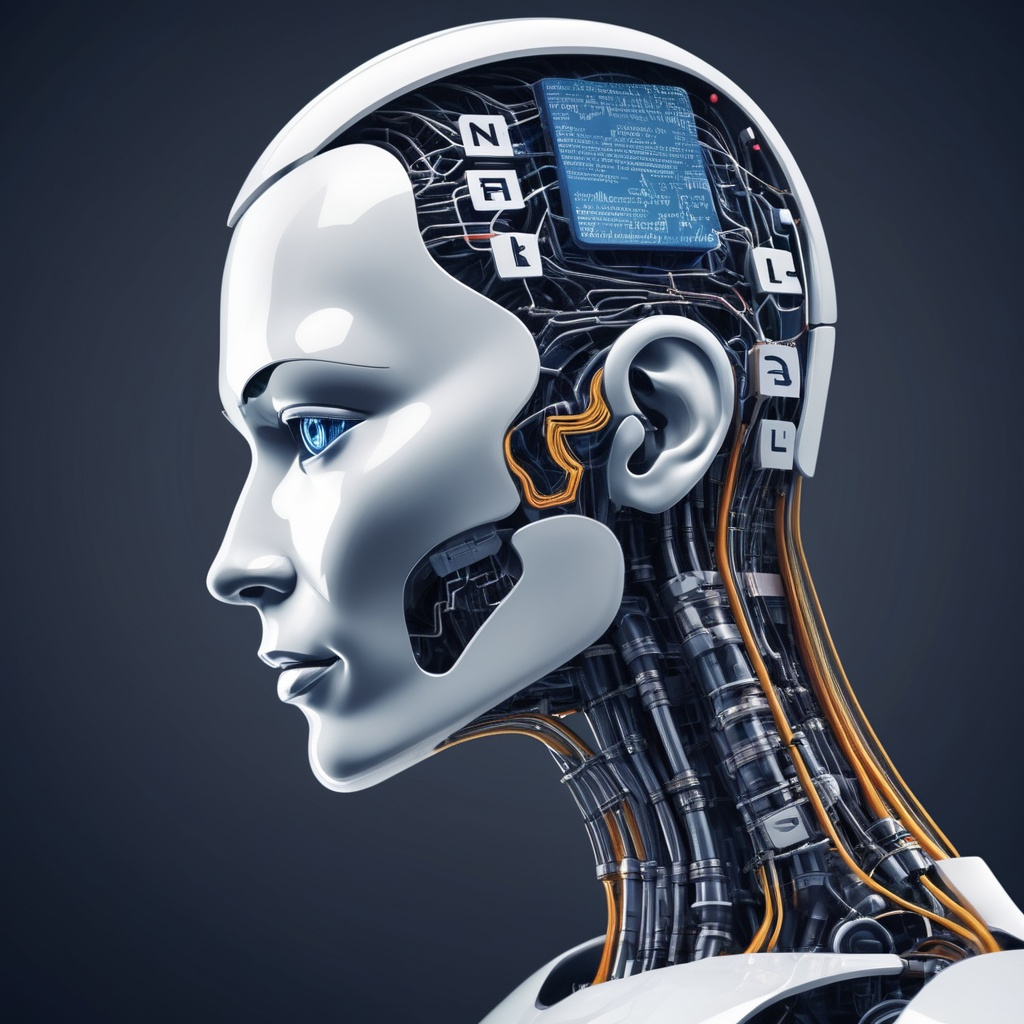
NLP is a sub-field of AI involving interaction between computers and human languages. Thus, enabling NLP to be the link between technology and communication, helping machines understand, interpret, and even create from scratch the human language. From Siri to Alexa, from advanced translation services to sentiment analyses, NLP is changing the way we interact with technology and, more importantly, changing how we interact with each other in our virtual world.
The Basics of NLP
NLP combines some disciplines linguistics, computer science, and AI-into algorithms that work with human language. Human languages are complex and, quite often, ambiguous: context, grammar, and other subtleties may alter their meanings. NLP is supposed to deal with this task by breaking down the language into parts and processing them with the help of sophisticated algorithms.
Actually, the gist of NLP consists of the following basic tasks:
Tokenization: It is the process of breaking down text into its individual words or phrases, called tokens, in order to understand what structure it has. Part-of-Speech Tagging: The identification of the role that each word plays in a sentence, whether a noun, verb, adjective, etc. Lemmatization and Stemming: The techniques of bringing a word back to its very origin, enhancing a machine's ability to deal with derivatives of the same word. Named Entity Recognition: It involves identifying and classifying major entities present in the text, including the names of people, organizations, dates, and locations.
Parsing: It involves the analysis of grammatical structure of a sentence to understand how the words are related. Applications of NLP The applications of NLP are great and diversified, influencing many industries and aspects of life. Some of the most prominent applications include: Virtual Assistants
Virtual assistants, including but not limited to Apple Siri, Amazon Alexa, and Google Assistant, are hugely dependent on NLP to understand voice commands and act accordingly. These systems recognize voice by converting it into text, identifying the intent behind the text, and returning a suitable response. NLP thus makes such assistants capable of a set of tasks ranging from simple, like setting reminders and sending messages, to more complex ones, such as answering questions and managing smart home devices.
2. Chatbots and Customer Service
So many businesses implement chatbots to instantly support their customers. Through the intervention of NLP, chatbots are able to comprehend a customer query in a natural, spontaneous mode and respond in the right manner. The chatbots are enabled to analyze the message of a customer, identify the intent of the text, and give information relating to that or troubleshooting issues or send complex inquiries to human agents. And with that, NLP-enabled chatbots advance technology by improving customer service and lower operational costs for businesses.
3. Machine Translation
Such services as Google Translate apply NLP when performing translation from one language to another. Machine translation has gone beyond literal word-for-word translations and can now capture the context and meaning of sentences. Modern NLP models using deep learning and neural networks improve accuracy, making translations more fluent and natural. Still, some challenges-idiomatic expressions or cultural nuances, for example-are not yet overcome, but NLP keeps pushing the edges in cross-language communication.
4. Sentiment Analysis
Sentiment analysis is an application of NLP that gives a degree of the emotional tone within a body of text. Companies use sentiment analysis technologies to keep track of social media, customer reviews, and other types of user feedback. By classifying texts as positive, negative, or neutral, companies develop a sense of consumer opinion to adjust their strategies in response. This application is particularly more useful in brand management, market research, and customer satisfaction analysis.
5. Text Summarization
With the help of NLP models, long documents, articles, or reports can be summarized into an auto-generated briefing. This is especially of great value in journalistic, legal, and academic contexts in which one has to go through volumes of information in less than no time. In essence, there are two major types of summarizations: extractive-summarizing texts into key sentences-and abstractive-paraphrasing into a concise version. Both the approaches demand great insight into content and context; hence they become complex, yet highly valued applications of NLP.
NLP Techniques and Technologies
Contemporary NLP systems are dependent on a combination of traditional and advanced AI techniques. It is also true that with the evolution of NLP, its models gradually became more sophisticated to handle a wide range of linguistic tasks. Key technologies include:
1. Rule-Based Systems
Early NLP systems relied heavily on rule-based approaches, in which grammar rules and vocabulary had to be encoded manually in the system. While effective for certain applications, rule-based systems could not solve the diversity and ambiguity of human languages. These kinds of systems required a lot of manual work and are unable to adapt to new or changing language patterns.
2. Statistical NLP
With the rise of machine learning, statistical methods became popular in NLP. These approaches analyze large datasets of text for patterns and make probabilistic predictions about language. For instance, a statistical NLP model would use a dataset of several millions of sentences and predict the most likely next word in a given sequence. Although more flexible than rule-based systems, statistical models still struggled with context and deeper language understanding.
3. Deep Learning and Neural Networks
Deep learning has revolutionized the field of NLP. Since the emergence of deep learning, neural networks, specifically RNNs and transformers, have equipped computers with the capability of processing language with enhanced contextual and sequential understanding. As an example, RNNs are designed to handle data in sequences; hence, they are ideally meant for processing sentences and paragraphs where the sequence of words is crucial.
This was the turning point with the introduction of transformer models: Google's BERT, which is an abbreviation for Bidirectional Encoder Representations from Transformers, and OpenAI's GPT, which means Generative Pre-trained Transformer. Models in these lines are pre-trained on a huge corpus of text and fine-tuned for specific tasks. These attain state-of-the-art results regarding understanding, translation, and generation. The manner in which transformers analyze a sentence whole, rather than just taking the words one after the other, has greatly improved quality and accuracy in the domain of NLP applications.
Challenges in NLP
Despite its growth, NLP faces the following challenges:
Ambiguity and Polysemy: Human languages are inherently ambiguous. Single words can carry multiple meanings depending upon context-what is called polysemy-and sentences can be interpreted in different ways. For example, "bank" may mean financial institution or even side of a river. The models are meant to identify from the context whether which meaning is being meant correctly.
Context Understanding: While understanding the context is important to allow for proper language processing, it has always been one of the toughest challenges with NLP. Whereas transformer-based models helped improve results in context sensitivity, longer texts remain a problem where understanding may rely on information across multiple sentences or paragraphs.
Multilingual and Cross-Cultural Nuances: Most NLP models show high performance in English, since large volumes of training data come in English. However, extending the capability of NLP to other languages, especially when there is a scarcity of data, can be an uphill assignment. Moreover, cultural nuances, slangs, and idiomatic expressions are pretty different with respect to various languages, which makes machine translation and sentiment analysis even more challenging.
Bias and Fairness: AI models, including NLP, tend to pick up bias from the datasets used for their training. This can lead to discriminatory outputs that sometimes manifest as language or stereotypical associations. NLP fairness and inclusion require a diverse set of training data and careful algorithm design to reduce this impact.
The Future of NLP
The future of NLP is bright, with continuous research and development pushing the limits of what AI can achieve. A few of the emerging trends and some points of focus include:
Multimodal NLP: Integrating text data with other forms, such as images, videos, and audio, into more innovative, richer, and more context-sensitive models. This bears great relevance to applications like video transcription, whereby visual clues could assist in understanding the language.
Personalized language models involve training an NLP model on one person and fine-tuning it to that particular individual in order to provide more personalized and appropriate responses. This will become key in tuning virtual assistants and other customer service bots into adapting toward the preference of a user and his or her way of communication.
Low-Resource Language Processing: Scaling NLP's capability to support underrepresented languages by developing new methods for training models with limited data; democratizing technology access and ensuring that speakers of all languages benefit from NLP advancement.
Ethical and Explainable NLP: With the pervading nature of NLP, much emphasis is being laid on building systems that are ethical and transparent. There is a growing amount of research that tries to bring more interpretability into NLP models so that users can understand how and why certain decisions are taken.
Conclusion
NLP is a disruptive technology that connects the best of human communication with machine understanding. Empowering AI to understand and paraphrase the spoken language of humans upgrades everything from customer service, healthcare, and education to entertainment and fun. While issues such as bias, context, and support for many languages are not yet overcome, the bright prospects of further development in NLP techniques give reason to expect great feats in an increasingly technological future where human language will be nothing foreign to computers.