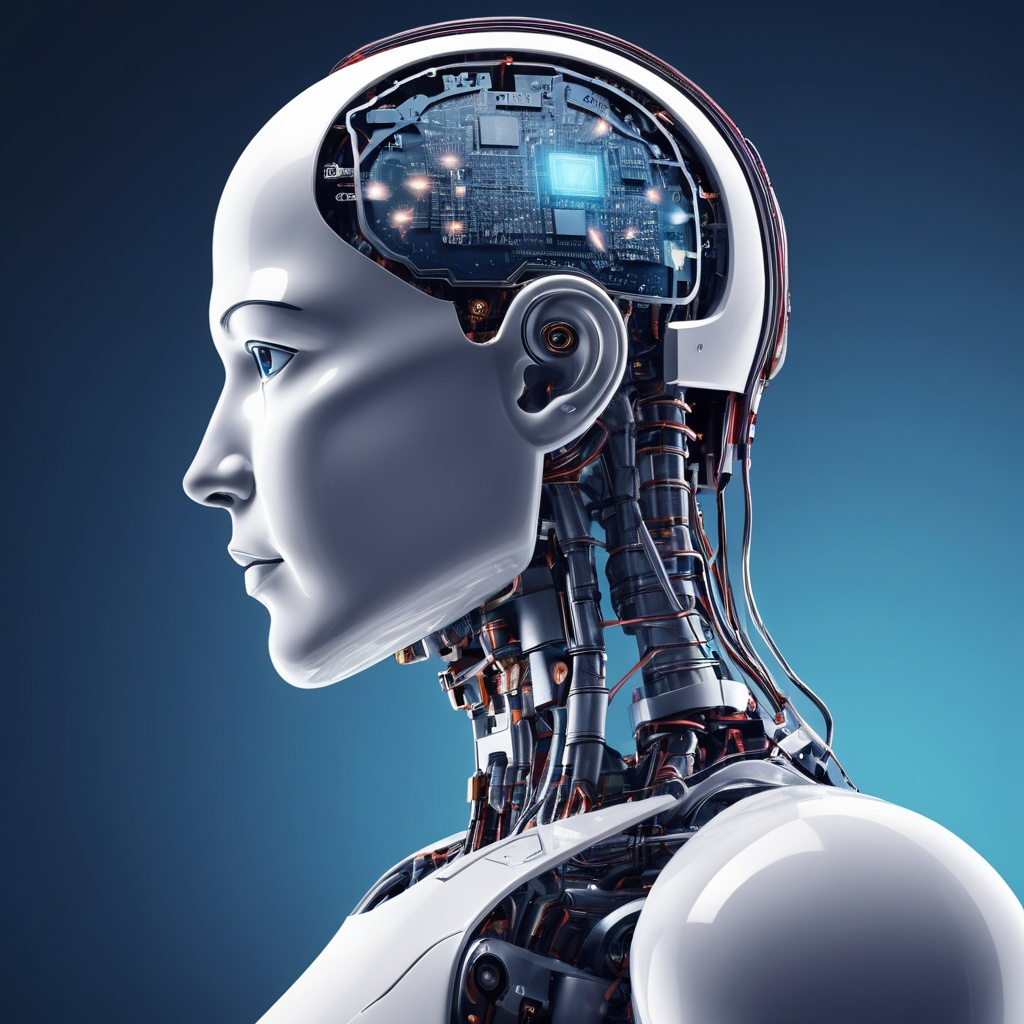
Artificial Intelligence, or AI, has rapidly become one of the most important technological advances of our day. It is changing how we interact with the world around us; it has opened vistas of automating routine tasks and has made solving complex problems within easier reach. We discuss in this article the power of AI, its various applications, the issue of ethics in its deployment, and how AI will drive future innovation.
1. Understanding AI: A Short Introduction
Artificial Intelligence is the emulation of human intellect processes by computer systems. The fundamental processes involved in AI are: learning-which involves acquiring information and picking up rules for using that information; reasoning-reaching to a conclusion through using rules, where this conclusion could be approximate or exact; and self-correction. In essence, there are two kinds of artificial intelligence:
Narrow AI: This kind of AI is narrowed down to certain functions-for example, speech recognition, image analysis, or language translation. It includes, for instance, virtual assistants of the type represented by Siri and Alexa, and the recommendation systems in use at Netflix and Amazon.
General AI: The general AI refers to the intellectual capability of machines to do anything a human does. Although still more or less theoretical, with improvements in machine learning and deep learning, we are getting closer to this level of intelligence.
The prevailing paradigm of AI is one in which rapid advancements have continuously taken place on the back of machine learning, natural language processing, computer vision, and robotics. It integrates these into different applications for AI to realize the productivity imperative, simplify operations, and drive innovation.
2. Power of AI in Various Industries
a. Healthcare
It changes the face of health care through better diagnostics, personalized treatments, and operational efficiencies. Indeed, algorithms of AI go through vast amounts of medical data from patient records, from imaging scans to even genetic information in order to make decisions upon which health professionals can rely.
Diagnostics: AI can help by their power to diagnose diseases from medical images with remarkable accuracy. For instance, deep learning algorithms for the detection of diabetic retinopathy, skin cancer, or pneumonia have been developed by scientists from imaging scans. Such tools do not only increase the diagnostic precision but also grossly reduce the time consumed in diagnosis.
Personalized medicine: AI allows personalized treatment planning for patients through the use of unique data for each individual patient. Machine learning algorithms may predict the response of certain medications in patients, thus helping doctors administer appropriate treatments that ensure the best results.
Operational Efficiency: AI automates administrative tasks like appointment scheduling and patient record management, which in turn enhances the efficiency of health workers in taking care of their patients. Documenting is an essential part of any treatment process, and this paperwork burden can be minimized by utilizing natural language processing algorithms.
b. Finance
The financial sector has embraced the role of AI in decision-making, risk reduction, and customer experience improvement. Financial firms use AI algorithms to study market trends, detect fraud, and provide personalized advice regarding finances.
Managing Risks: AI models are used to identify patterns in the historical data to predict the possibility of risk. Therefore, it would be more interactive for financial institutions within the lending decisions considering a borrower's credit score, past transaction history, and market conditions, which is attainable by reducing the rate of defaulting.
Fraud Detection: The AI-powered system is applied in real-time monitoring of transaction activity for detecting strange trends that signal fraud. The Machine Learning algorithms self-develop and learn from additional incoming data to enhance the ability of fraud detection for customer protection.
Robo-Advisors: AI-driven robo-advisors will offer automated investment advice based on the individual's risk profile and financial goals. These platforms analyze market data for real-time investment decisions to enable consumers to plan their finances more easily and efficiently.
c. Transportation
AI is creating a dent in the transportation industry by making it safer, optimizing logistics, and opening the way for autonomous vehicles.
Autonomous Cars: Driverless cars analyze sensor data and perceive with AI algorithms, based on which decisions are made while driving. Companies like Waymo and Tesla pioneer this work in hope that it will avoid road accidents and enhance transportation efficiency.
Traffic Flow Management: AI systems smoothen the flow of traffic by processing data from cameras, sensors, and GPS devices. Smart traffic lights adapt in real time to actual conditions, reducing congestion and thus commuters' time on the road.
Logistics Optimization: AI-powered solutions make supply chain management much more efficient by predicating demand, optimizing routes, and improving stock management. The largest firms, such as Amazon and UPS, employ AI techniques to fine-tune their logistics and ensure timely delivery at minimal cost.
d) Retail
AI is now shaping retail in ways that include improving customer experiences, managing inventory, and executing personalized marketing strategies.
Personalized Recommendations: E-commerce websites deploy AI algorithms to study the behavior and preference of a customer for personalized product recommendations. This personalizes the customer's experience and increases customer interaction for more sales since relevant content will be provided to the consumers.
Inventory Management: AI systems predict demand patterns and optimize inventory levels, reducing overstock and stockouts. Retailers can leverage AI to analyze sales data and market trends to ensure there is product on hand when customers require it.
Chatbots and Virtual Assistants: More often than not, retailers are adopting AI-driven chatbots for handling customer support or assistance-related queries. These virtual assistants can help answer questions, guide the customers in the purchasing process, and handle complaints, ultimately improving customer satisfaction.
e. Agriculture
AI is making huge strides in agriculture because it optimizes crop management, improves yields, and advances sustainable practices.
Precision Agriculture: AI-powered tools analyze data collected from drones, satellites, and sensors regarding the health of the soil, the conditions of the crops, and patterns related to weather. Valuable data from these analyses assists farmers in making informed decisions about planting, irrigation, and pest management, thus resulting in increased yields and minimizing resource waste.
Farm Automation Machinery: AI enables autonomous tractors and drones to operate themselves in planting, harvesting, spraying pesticides, etc. Such technologies have, all in all, increased efficiency and reduced the cost of labour in agriculture.
Predictive Analytics: AI algorithms can predict crop yields and market demand, enabling farmers to undertake more accurate planning for their activities. Historical data and environmental factors come in to help the farmers decide on the best time to plant or harvest a crop.
3. The Power of AI in Making Lives Better
Beyond industries, AI also promises to make lives better in many ways.
a. Smart Home Technology
AI-powered smart home appliances further enhance convenience, safety, and energy efficiency in homes.
Smart Assistants: AI in devices such as Amazon Echo and Google Nest can understand voice commands and automate tasks. It makes life more comfortable by allowing users to switch on lights, adjust temperatures, and even link to entertainment systems by using mere voice commands.
Home Security: AI-powered security systems are capable of monitoring environments, detecting unusual activities, and alerting the homeowner. Wi-Fi cameras will include face recognition to pick up family members and show who is familiar or not.
b. Education
AI redefines the face of education to create more personalized learning experiences and improved learning outcomes.
Adaptive Learning Platforms: AI-powered educational software continuously analyzes the performance of students and develops a suitable modification enabler to customize the content to meet customized learning needs. This thus provides students with an easy way to understand concepts that would otherwise seem quite difficult.
Automated Grading: AI algorithms can grade assignments of the students and give feedback, reducing the administrative burden on educators, enabling them to focus more intently on personalized support and guidance with all students.
c. Mental Health Support
Applications come out for supporting mental health and well-being with the use of AI.
AI-powered chatbots can be used to provide mental health support related to anxiety, depression, or stress on a 24*7*365 basis. The chatbot will be able to provide coping strategies, mindfulness exercises, and resources to seek professional help.
Mood Tracker Apps: In AI-powered apps, input by the user is analyzed to gain insights into a person's mood. Upon monitoring mood patterns and detecting when interventions may be required, the user is in a better position to take control over their mental health.
4. Ethical Issues and Challenges
Critical analysis of the evolving nature and application of AI is required. Various challenges have to be overcome in order to proceed with the responsible development of the technology in:
a. Bias and Fairness
AI algorithms are only as good as the data they are trained on. If the training data contains biases, then the resulting AI models may manifest these biases, leading to prejudiced outcomes. For example, biased algorithms in hiring practices tend to discriminate against certain groups of demography.
To address this challenge, developers must ensure that diversity and inclusion are prime considerations in training data, and that bias detection and mitigation form part of the process in building AI systems.
b. Privacy Concerns
The pervasive deployment of AI has given rise to serious concerns regarding privacy, especially in respect to data collection and surveillance. Individuals often provide personal data to various applications running on AI, raising questions over its usage, storage, and protection.
Developers and organizations should create proper policies regarding data privacy and follow the set regulations to safeguard user information. Transparency in data collection and usage will enable gaining more trust from users.
c. Job Displacement
Along with automating tasks and processes, there is a greater fear of job displacement. Though AI was designed to enhance productivity, the technology could replace some jobs which might further lead to unemployment in those sectors.
These issues should be addressed by the policymakers and the organizations through training and skill up-gradation among the working population to equip them to carry out tasks beyond machine capabilities which involve creativity, emotional intelligence, and complex problem-solving skills.
d. Accountability and Transparency
But with ever-increasing autonomy of AI systems, questions about accountability arise. Thus, the question of who is liable for the actions taken by AI algorithms-they themselves, developers, or organizations-presents a daunting legal and ethical predicament.
To achieve popular trust for responsible AI deployment, it will be necessary to clearly prescribe guidelines and frameworks of accountability and transparency in AI decision-making processes.
5. The Future of AI Power
The future of AI holds immense potential for transformation in industries, improvements in living, and driving innovation. With the advancement in AI technology, various trends are seemingly going to influence its development; these include:
a. Human-AI Collaboration
In the future, AI development will be about collaboration between humans and machines. Instead of taking jobs away from human beings, AI will enhance the ability of humans to work smarter and more innovatively. Consequently, this might improve results in healthcare, education, and creative fields, among others.
b. Democratization of AI
Greater accessibility to the tools of AI will meaningfully increase the creation of value with AI by individuals and small businesses alike. This democratization of the development and deployment of AI solutions through open-source AI frameworks and platforms that make the user experience easy will spur even greater innovation in many fields.
c. Sustainability of AI Practices
Consequent to growing concerns over the ecological footprint due to AI, sustainable AI practices will be advocated. The research fraternity and organizations would develop and focus on energy-efficient algorithms and hardware that reduce the carbon footprint resulting from AI applications and support green technologies.
d. Continuous Learning and Adaptation
The future of AI is continuous learning and adaptation. Over the coming years, the capacity of AI systems to learn from real-time data and respond by tuning behavior will continue to improve. The intrinsic ability for adaptation opens more avenues for AI systems to react to dynamic environments and changing user needs more effectively.
Conclusion
The power of AI is making changes in industries and lives that the world has not seen before. From health care and finance to transportation and education, AI is paving new pathways to innovation and efficiency. But even as we tap into the great promise of AI, we also have a responsibility to confront these critical issues: ensuring ethics, promoting transparency, and trying to eliminate biased performance in all forms. In this sense, the ability to responsibly solve these challenges will truly unlock the power of AI in building a future that benefits all individuals, organizations, and society as a whole. Standing at the threshold of this new epoch, with AI calling the shots, innovation and further improvement are unlimited, promising a brighter future for one and all.